
https://delta13news.com/detective-privado-garante-de-la-verdad
The debate over the role and social perception of the private detective was the focus of one of the sessions held by La Sociedad Clave in Barcelona, where investigation professionals, legal experts and journalists reflected on the challenges facing the sector. The meeting addressed issues such as the legal limits of private investigation, the fine line between gathering evidence and respecting privacy, and the lack of awareness that still exists in society about the real work of these professionals.
The exchange of views made clear that the figure of the detective is still marked by media stereotypes—particularly the one associated with investigating infidelities—which, according to the participants, distort the breadth of a profession that today extends into the corporate, judicial and security spheres. In this context, investigators, legal experts and journalists agreed on the need to improve the sector’s communication and to clarify both its social role and the legal framework within which it operates.
Indeed, during the panel titled ‘Law and privacy in private investigation’, and with regard to the legal limits that private investigators face in carrying out their work, Francisco Marco, of Método 3, brought up a 2023 ruling that declared null an item of evidence submitted by a detective because the photographs had been taken inside the garden of a home. In this respect, case law has always held that the garden is an extension of the home and therefore had to be constitutionally protected.
However, in this particular case, the images captured were visible to the naked eye, which led the judge investigating the case to question where they had actually been taken. Given the uncertainty surrounding this point, “the judge had to declare the evidence null and void”. Marco himself, who explored the subject in his doctoral thesis, stated that “what is in plain sight is what may be captured, and what is not in plain sight would be the preserve protected by privacy”. Fittingly, he passed the baton to two respected legal experts seated at the table in order to shed further light on the matter.
The legal expert Fermín Morales, regarded as one of the pioneers in the development of the right to privacy in Spain, explained the criteria that, from a legal standpoint, make it possible to determine when an image may infringe the right to privacy and when, by contrast, it may be considered valid evidence. Morales noted that, in addressing this type of situation, two legal parameters must essentially be taken into account. The first concerns the way in which the investigator obtains the image. “The first parameter is whether the investigator, in taking the photographs, has had to overcome some obstacle”, he explained. In his view, this element is key because, in many cases, the existence of physical or technical obstacles delimits the scope of privacy protection.
The legal expert pointed out that this very aspect is one of the elements the ruling calls into question. As he explained, the court appears to have considered that it was not sufficiently clear how the images had been taken and whether the investigator had had to overcome any kind of barrier to obtain them. “In this case we probably do not know how the photographs were obtained, whether someone had to climb up somewhere and overcome an obstacle or not, which is what the ruling takes issue with, and given the uncertainty as to whether the obstacles were overcome, it does not admit the evidence”, he stated.
In this respect, Morales recalled that criminal law and case law have traditionally drawn a distinction between what is visible from public spaces and what lies within a protected sphere. “What is within sight may be photographed or filmed without any problem”, he noted.
The legal expert linked this criterion to the limits established by Spain’s Criminal Code regarding the capture of images and clandestine audiovisual surveillance, particularly as set out in Article 197 of the Spanish Criminal Code. As he explained, the legislator defines as unlawful any conduct involving surreptitious or clandestine surveillance through the use of technical devices intended to intrude upon a person’s private sphere.
“If we can take a photograph from the street because a man is on the balcony of his home, no obstacle is overcome, nor has that person, through his behaviour, defined a special sphere of protection”, he argued. The situation changes, however, when the images are obtained in spaces clearly delimited as private.
Morales stressed that enclosed or bounded spaces, such as the interior of a home or certain areas of a private property, naturally give rise to a higher expectation of privacy. In such cases, he explained, obtaining images from outside by technical means may constitute unlawful conduct. “Taking images with technical devices from outside towards a house would constitute an offence, because you are using technical devices to overcome an obstacle, which is distance”, he indicated.
The second parameter noted by the legal expert relates to the behaviour of the observed person themselves. In his view, the right to privacy also depends on whether the individual has, through their conduct, created a reasonable expectation of privacy. “People define their sphere of activity through their own behaviour”, he explained. In this way, Morales maintained that the legal analysis must combine both criteria: on the one hand, whether the investigator has had to overcome obstacles to obtain the image and, on the other, whether the photographed person had generated a legitimate expectation of privacy at that moment.
“The two parameters are whether or not I overcome an obstacle, which renders my conduct unlawful or the evidence inadmissible, and, secondly, whether the person being observed or photographed has, through their behaviour, generated an expectation of privacy or not”, he summarised. According to the legal expert, the combination of these factors enables the courts to determine whether photographic evidence obtained by a detective may be admitted in legal proceedings or whether, on the contrary, it infringes fundamental rights such as privacy or the inviolability of the home. His analysis highlights the growing legal complexity surrounding the gathering of evidence in private investigations, especially in a context where technology increasingly facilitates the capture of images and personal data.
The legal expert Luis de las Heras, regarded as a disciple of the privacy-law specialist Fermín Morales, addressed the legal limits of gathering evidence in private investigations and the differences between the Anglo-Saxon and continental legal models with regard to fundamental rights. De las Heras explained that, to understand this type of judicial ruling, one must start from a clear methodological basis. “We must begin from an important professional premise, which is to distinguish the Anglo-Saxon model from the continental model”, he noted. As he recalled, the European legal system is founded on strong protection of fundamental rights, even in the face of evidence that might prove relevant in legal proceedings.
In this context, the legal expert cited the doctrine of the German criminal-law scholar Franz von Liszt, who more than a century ago argued that even the person under investigation retains a “magna carta of rights”. “Von Liszt said that the offender has a magna carta of rights, and into that magna carta we have incorporated the right to privacy”, he explained.
Building on that principle, De las Heras stressed that the Spanish legal system sets clear limits on the gathering of evidence when it infringes fundamental rights. Specifically, he mentioned the constitutional and procedural framework governing this matter, recalling that Article 11 of the Organic Law of the Judiciary establishes that evidence obtained in violation of fundamental rights, or evidence derived from it, cannot be admitted.
As he explained, this approach contrasts with the Anglo-Saxon model, particularly the US one, where the basis for excluding evidence is different. “As opposed to the Anglo-Saxon model, which preaches the formula of the ‘deterrent effect’, which is basically to penalise the gathering of evidence through inadmissible methods”, he noted. In that system, he added, the main objective is to dissuade investigators or the police from using illegal methods.
The proper caution of the detective
“In the United States, I punish the police officer who enters a home without authorisation and I send a warning to the rest of the police: do not investigate this way, because the evidence you obtain will be null”, he explained. In the Spanish system, by contrast, the key lies not so much in punishing the investigator as in directly protecting the fundamental right that has been infringed. In the field of private investigation, De las Heras stated that this difference translates into a particularly complex framework for detectives. “The minefield the detective faces is the systematic collision with the violation of personality rights”, he noted, referring to the protection of privacy enshrined in Article 18 of the Spanish Constitution and developed through case law.
The legal expert further recalled that the concept of private life is interpreted broadly within the European sphere, following the terminology used by the European Court of Human Rights. In that context, the analysis of each case must be carried out on an individual basis, weighing the specific circumstances in which the evidence was obtained.
With regard to the specific case of the 2023 ruling, De las Heras maintained that the legal debate revolves around delimiting the space protected from outside view. “The limits of non-invasion of privacy come down to whether or not it is a space restricted from the gaze of others”, he explained. In his view, if the garden of the home could be observed without the need to overcome physical barriers, the legal assessment might be different.
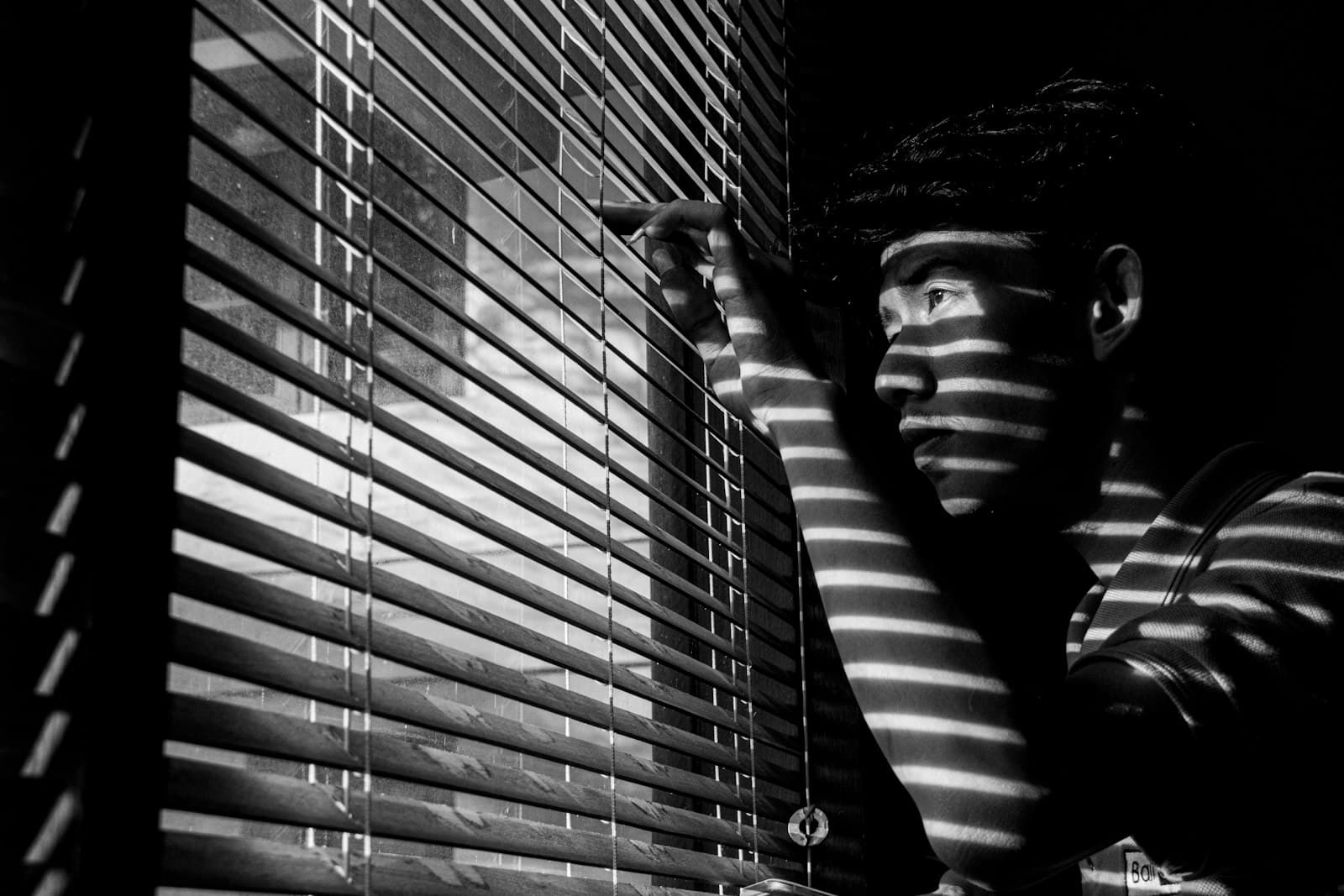
The expert also mentioned some European precedents that have taken privacy protection to very strict limits. He cited, for example, court decisions in Germany in which evidence has been annulled when it was obtained by observing the interior of a home through a window with the blind left up. “I do not believe we need to go to such extremes”, he qualified.
In any case, De las Heras stressed that the ultimate purpose of gathering evidence in the judicial sphere is always procedural. “The purpose of obtaining evidence is to win a lawsuit, let us be clear”, he stated. As he explained, the parties submit evidence with the aim of rebutting the opposing position or defending their own claim before the court. For this reason, he considered that private detectives must act with particular caution when obtaining images or information that may affect fundamental rights. In his view, one of the most prudent criteria is to avoid the use of technical devices that make it possible to overcome physical barriers or intrude upon private spaces.
“A good parameter is not to use capturing and filming devices and not to overcome barriers that would create that expectation of privacy”, he noted. That concept, he added, relates to the so-called reasonable expectation of privacy theory, one of the criteria used by the courts to determine whether or not an unlawful intrusion has taken place. Ultimately, Luis de las Heras’s analysis highlights the legal complexity surrounding the gathering of evidence by private detectives in Spain, a field in which the need to investigate facts relevant to legal proceedings must be balanced against the protection of fundamental rights such as privacy and private life.
The practical application of the legal limits on private investigation was the subject of debate between legal experts and detectives during a professional meeting that examined a 2023 ruling by the Supreme Court of Spain which annulled evidence obtained by a detective because photographs had been taken inside the garden of a home. During the conversation, professionals from the sector set out the real difficulties involved in translating legal concepts of privacy and private life into the day-to-day work of investigators.
And in practice, what then?
The private detective Elisenda Villena offered the perspective of those who work in the field and must make immediate decisions about whether an observation or an image may infringe a person’s privacy. “I would like to give something of the viewpoint of the detective who is out on the street. All of us detectives are very clear about the legal concept, because it is the sword of Damocles hanging over any of our reports”, she explained.
Villena stressed that, although professionals are aware of the legal limits, the concrete application of those criteria often proves difficult in real situations. As she pointed out, the lack of fully defined parameters can create doubts at the moment of carrying out an investigation. “How can we know where that limit lies beyond the will of the adjudicator?”, she asked.
To illustrate that uncertainty, the detective gave a practical example concerning the observation of a private garden from a public road. “If I am trying to observe the garden of a home and the fence is 1.65 metres high, I cannot see anything, but another person can. Does that mean they are not violating privacy and I am, if I stand on a stool?”, she asked.
In her view, this type of situation shows the difficulty of applying abstract legal criteria to the everyday reality of investigation. “When you are ‘in situ’, with the concepts clear in your mind, there is no clear limit that allows you to decide”, she noted. Villena also pointed to the difficulty of determining when a person generates a reasonable expectation of privacy, a key concept in case law on the right to privacy. “If a person puts up a 1.50-metre fence because they want to see outside, the outside can also see them”, she reflected, wondering how detectives working in the field can have a more reliable reference as to what is considered private.
Faced with these doubts, the legal expert Fermín Morales replied that the law can hardly offer absolute rules in this type of situation, since the legal assessment depends on the specific circumstances of each case. “You will not have absolute certainty, because the balancing test is case by case”, he stated. Morales explained that the legal system sets out some general principles that may serve as a guide. One of them is that actions carried out in public spaces, or whatever is clearly visible from those spaces, may be subject to observation or recording. “If I photograph or film something in public places, I am allowed to do so”, he noted.
The legal expert also gave the example of situations in which people themselves take no measures to preserve their privacy. “If two people are talking out loud in a public place, I could even record them because they have not observed any self-protective conduct”, he explained. In his view, in such cases no sphere of privacy that should be protected would have been created. Morales insisted, however, that when it comes to private spaces or situations in which an expectation of privacy may exist, the legal assessment becomes far more complex. “When something is within sight, it will have to be examined case by case”, he reiterated.
The legal expert also referred to the high court’s ruling that prompted the debate, signed by Judge Manuel Marchena. As he explained, the ruling’s main criticism was not solely the capturing of the images, but the lack of sufficient information about how they had been obtained. “What that ruling takes issue with is that the balancing test has not been established. They do not tell me how those photographs were taken”, he noted. Specifically, the court appears to have found a detailed explanation lacking as to whether the investigator had to overcome physical or technical obstacles to capture the images, or whether they were in fact in plain sight from the public space. “It is not made clear whether or not an obstacle had to be overcome, or whether it was in plain sight”, he indicated.
Morales added that even apparently secondary factors may influence the assessment of a particular case, such as the position or physical characteristics of the observer. “Whether something is in sight also depends on the person. If the investigator is two metres tall, they may have more things within sight”, he pointed out.
The debate highlighted the legal complexity surrounding the gathering of evidence by private detectives, a field in which the investigation of facts relevant to legal proceedings must constantly be balanced against the protection of the fundamental right to privacy. Both legal experts and professionals agreed that the key will continue to lie in the individual analysis of each situation and in the weighing of conflicting rights by the courts.
The public image of the detective
The role and social perception of the private detective also formed part of the debate at this professional meeting, in which investigators and journalists reflected on the sector’s public image and its presence in the media. During the conversation, the detective Francisco Marco and the journalist Mayka Navarro agreed that the profession remains largely unknown to the public and is still marked by stereotypes that do not reflect the real complexity of its work.
Marco, founder of the agency Método 3, acknowledged that part of this lack of recognition stems from the sector’s own dynamics. “We have been reproached for the detective being largely unknown to society, and it is the detective’s own fault”, he noted. In his view, private investigation professionals have traditionally maintained a discreet profile that, although it responds to the confidentiality demands of the work, has also contributed to society knowing little about their actual activity.
The detective further admitted that those who do appear in the media often do so in an individual capacity. “Those of us detectives who appear in the media ultimately fight for our own image”, he explained. As he pointed out, this media presence does not always respond to a strategy for attracting clients, but also to a form of personal positioning or of building a professional brand.
Marco stressed, however, that the sector lacks a common representative voice to act as an interlocutor with the press. “There is no single voice that speaks for detectives”, he stated. In his view, it would be useful for journalists to have a clear point of reference to turn to whenever a news story involves a private detective or an investigation of this kind. In this regard, he revealed that the sector is considering the creation of a professional observatory which, among other initiatives, could promote a sociological study to analyse the social perception of the profession objectively. The aim would be to find out how the public really views private detectives and, on the basis of that diagnosis, to design communication strategies that help to explain their work better.
Marco also recalled the relationship between private investigation and investigative journalism, two fields that, he said, can reach similar conclusions by different routes. In this context he cited his collaboration with journalists on complex investigations, where both approaches—the journalistic and the detective’s professional one—have made it possible to cross-check information and arrive at the same conclusions.
From the media’s perspective, the journalist Mayka Navarro agreed that the public image of the private detective is still conditioned by deeply rooted stereotypes. “I think you have not managed to escape the image of the professional whom the media call upon to do the work of hunting down cheating partners”, she stated. As she explained, this cliché remains present in many programmes and reports, especially on television.
For the La Vanguardia journalist, that stereotype contrasts with the reality of a profession involved in a wide variety of investigations. “The range of cases you take part in is infinite”, she noted, lamenting that this lack of awareness about the true scope of private investigation remains “staggering”.
Navarro also pointed to a paradox affecting the sector: much of its work remains invisible precisely because of the confidentiality demands that characterise the profession. As she explained, many detectives prefer not to appear publicly in the cases they work on, in order to protect their clients and preserve professional trust. “You do not answer to the media; you answer to your clients”, she stated.
This situation means that, even when a detective’s involvement has been decisive in an investigation, their role is sometimes left in the background in favour of other actors involved. In the journalist’s words, the sector faces a difficult balance between the discretion its activity demands and the need for visibility so that society can understand its role.
Navarro also compared the situation of detectives with that of other professionals who have achieved a much greater presence in the media space, such as criminologists. As she explained, in recent years these specialists have established themselves as regular commentators on television and radio programmes devoted to crime reporting. Among the media figures of crime journalism she mentioned, for example, the presenter Ana Rosa Quintana and the journalist Nacho Abad, who have helped to popularise this type of content on television.
In this context, Navarro wondered why detectives have not occupied a similar space as analysts or investigation experts. “Every programme has its criminologist. Where is the detective?”, she asked. In her view, private investigation professionals have direct experience in analysing scenarios, behaviours and evidence that could add value to media debates on criminal cases or complex investigations.
The journalist suggested that one of the keys may lie in the organisation of the profession itself. While criminologists have developed professional-body structures and clear channels of dialogue with the media, detectives still lack a unified platform to facilitate that relationship. “When you were looking for a criminologist, you had a clear point of contact within that group”, she explained.
The debate made clear that the private detective profession still faces a significant communication challenge: explaining to society the true scope of its work without giving up the discretion that investigation demands. Both sector professionals and journalists agreed that greater organisation of the profession and a more defined communication strategy could help to overcome stereotypes and give visibility to an activity that, despite its relevance in numerous judicial and corporate spheres, remains little known to the general public.
………..