
Theodore Roosevelt scornfully called the first investigative journalists muckrakers (rakers of muck). Conceived as an insult, the nickname ended up giving its name to an entire tradition of rigorous political exposure. And although a romantic inertia leads us to think that democracy brought investigative journalism along as an aesthetic accessory, the reality is harsher: democracy did not take up investigation for pleasure, but for survival.
A free society demands independent scrutiny, not because the press wants to be intrusive, but because power tends to seek its own comfort. And every time power grows too comfortable, corruption ceases to be an anomaly and becomes a system. It is then that investigation emerges as a mechanism of democratic hygiene.
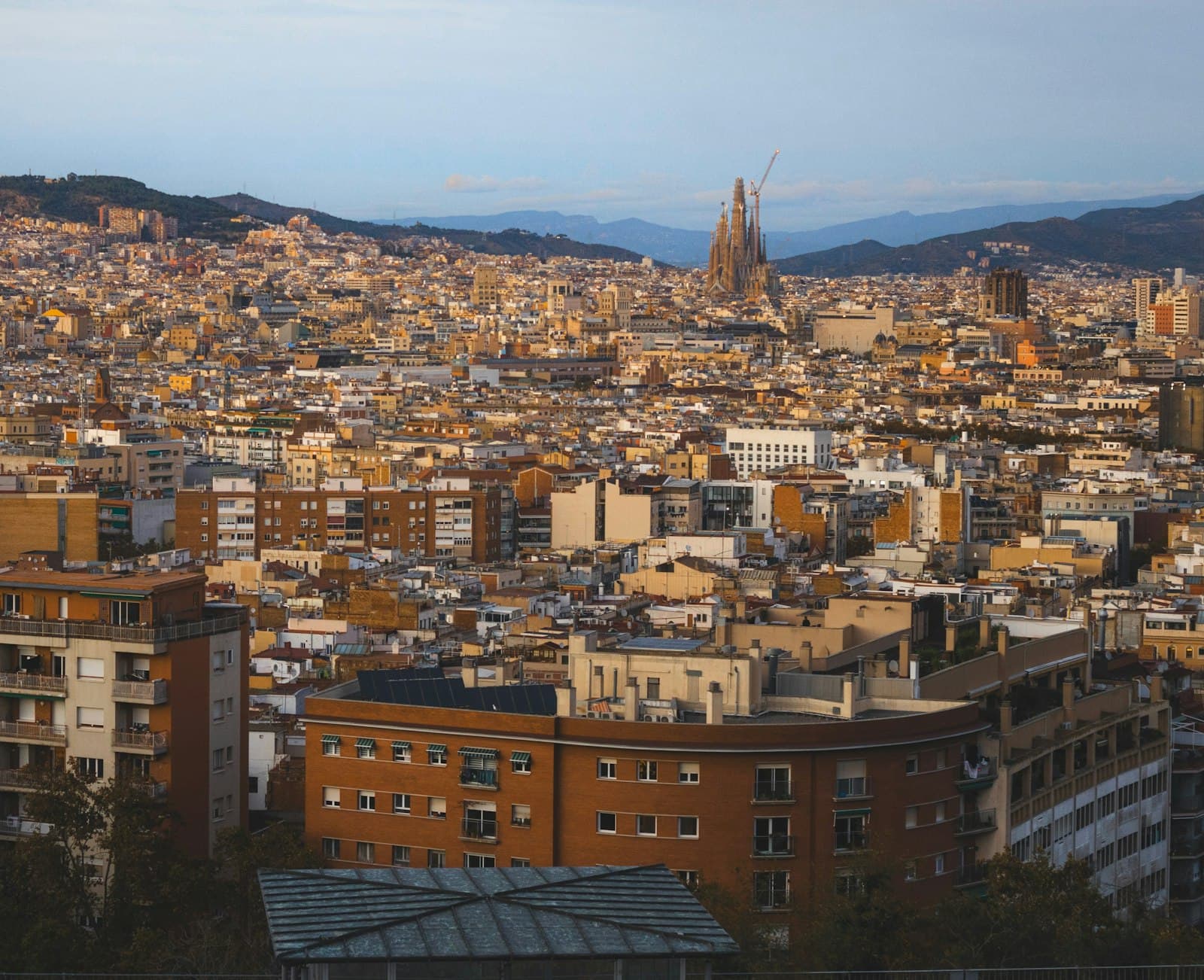
Today Spain is going through one of those cyclical moments. The revelations that teams such as El Mundo’s are putting on the table feel reminiscent of the final days of “Felipism”. Without needing to take an ideological stance, the charged atmosphere is similar: politics shields itself, institutional credibility crumbles and citizens perceive more noise than solutions. In this landscape, investigation re-emerges as the only reliable engine of regeneration.
If Felipe González’s ministers had breakfast on Mondays in fear, it was because Antonio Rubio and Manolo Cerdán shaped the political life of the week; and on Thursdays Interviú or Tiempo finished the job. Today, that generation has given way to another that, in print or digital, sets off viral earthquakes on Twitter and WhatsApp chains. The channel changes, but the citizen’s certainty remains the same: independent investigation is the most effective means of keeping politicians in check and of ensuring that our money is spent on what it was budgeted for.
That is why last Friday’s breakfast, hosted by Sociedad CLAVE —a lobby of private detectives— became a snapshot of the moment. There, four leading journalists (Esteban Urreiztieta, José María Olmo, Daniel Montero and Beatriz Parera) came together with private investigators, magistrates and police officers. The presence of the latter among the audience charged the room with a telling symbolism: those who judge and investigate on behalf of the State had come to listen to those who investigate from outside the State. A tacit dialogue took place between the different pillars of public truth, acknowledging that, when official channels become blocked, transparency depends on the press and on civil society.
The most forceful voice was that of Esteban Urreiztieta, deputy editor of El Mundo, whose analysis sounded like a warning. He explained that the current ecosystem —saturated with instant headlines and 24-hour controversies— has damaged the capacity of the craft. “We live in absolute madness in which we are increasingly exposed to the risk of making mistakes,” he declared. But in the midst of that whirlwind he left a phrase that ought to be a mantra: “Good information has a life of its own.”
That statement recovers the philosophy of those first muckrakers. The truth needs neither noise nor clickbait. It needs what Urreiztieta called “slow cooking”. In a country where power manufactures noise to cover up facts, meticulous verification is the only possible regeneration.
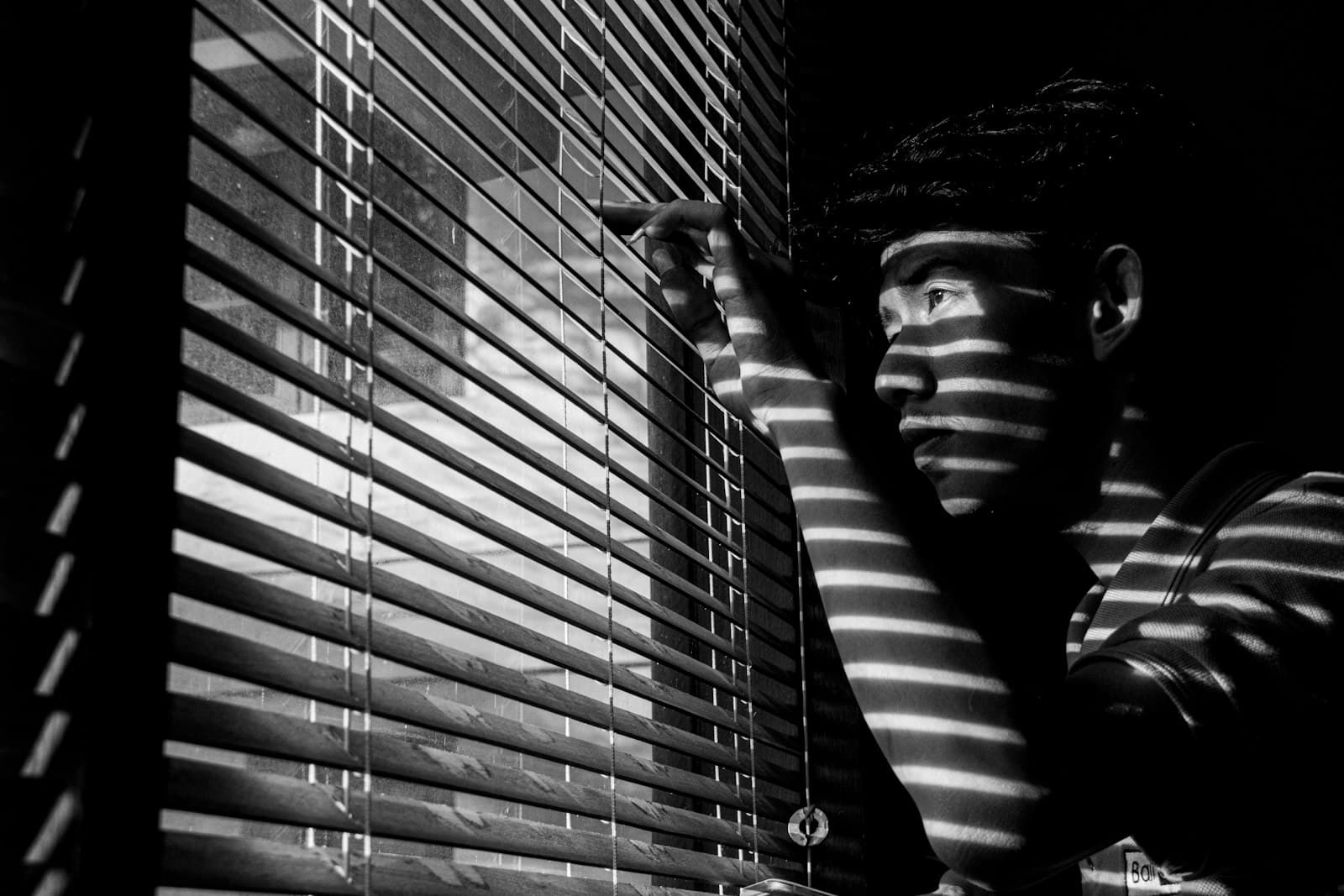
This is where the other actor in the alliance comes in: the private detective. If the journalist investigates in order to tell, the detective investigates in order to prove. In an age of deepfakes and Artificial Intelligence, this difference is a democratic guarantee. At the Sociedad Clave gathering it was stated bluntly: “If we say that someone enters a place, we have to have a photograph. If not, we are not going to say it.” The detective does not insinuate; he proves. That culture of evidence turns the private investigator into a notary of physical reality.
The urgency of this “democracy of proof” became clear when José María Olmo recounted how, after publishing truthful reports, he faced the accusation that they had been generated by AI. “I didn’t know how to prove that something that is true is true,” he confessed. When truth ceases to be self-evident, telling it is no longer enough; it has to be technically safeguarded.
Daniel Montero closed the circle with a critical reflection on the market. “It is very important to tell things better than the rest, because telling them faster is increasingly going unnoticed,” he assured. Speed has been devalued; depth is the new safe haven. Montero, however, warned about the secondary problem: the commodification of news. “When you sell information, you want it to look better than the one next to it; that is the great problem today, where so many stories are inflated just to find a gap in the market.”
What we saw at that breakfast was not a formal alliance between detectives and journalists, but a mutual recognition. Both communities build the foundations on which judges later operate. The journalist sheds light, the detective gathers the evidence and the judicial system acts. Beatriz Parera defended this shared sphere, recalling that the collaboration extends to judges and police. Montero seconded this: “I learned to value the work of detectives that very few people know about, that hidden work helping with certain investigations.”
The conclusion is clear: democratic regeneration is not born in speeches or in pacts of State, but in facts. In cold data. In stories reconstructed against the current. Because journalistic and private investigation are not luxuries; they are assisted breathing when power relaxes so much that the heart seems to stop. As long as there are journalists like Urreiztieta, Montero, Olmo or Parera who remember that the truth allows no shortcuts, and detectives who affirm only what they can prove, there will be a democracy to regenerate.
As Olmo aptly recalled, “sometimes, breaking a story that is too good brings you problems.” But in times of opacity, those problems are the exact price of freedom.
Written by: Francisco Marco, 25 November 2025 (The Marco Company)